

“You’ve just completed a full mouth reconstruction, now what?” That’s a question many patients quietly ask once they leave the dental chair. It’s normal to feel a mix of relief and excitement, along with some discomfort and uncertainty about what comes next. After such a comprehensive treatment, your focus naturally shifts to healing and getting back to everyday life.
Recovery plays a key role in how successful and comfortable your results will be. The way you care for your mouth in the days and weeks ahead directly impacts how well everything settles and functions long-term.
At Sunrise Dental, patients are guided through every step, but having a clear plan helps you feel more in control. This guide walks you through practical, easy-to-follow recovery tips so you can heal smoothly and protect your new smile.
What to Expect After Full Mouth Reconstruction
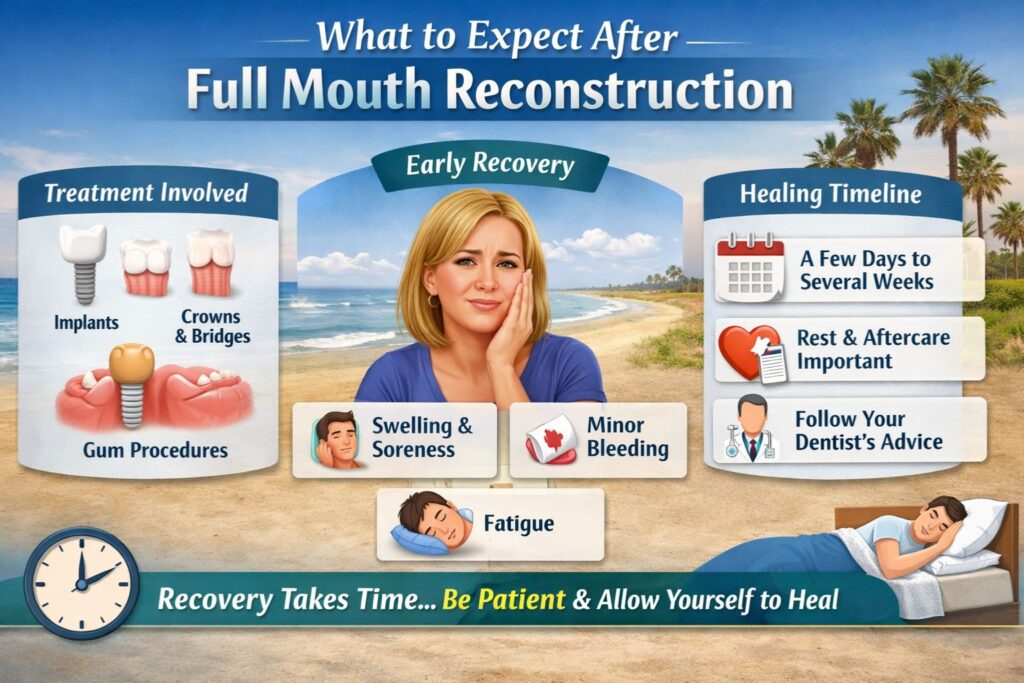
A full mouth reconstruction typically involves a combination of treatments designed to restore both function and appearance. This may include dental implants, crowns, bridges, or gum procedures, depending on your specific needs. Because multiple areas of your mouth are treated, your body needs time to adjust and heal properly.
In the first few days after full mouth reconstruction in Huntington Beach, it’s common to experience swelling, mild soreness, and occasional bleeding. These are normal responses as your tissues begin to heal. Some patients also notice fatigue, especially if the procedure was extensive. Your body has been through a significant process, so rest and recovery are essential.
Healing timelines can vary widely. Some people feel better within a few days, while others may take a few weeks to fully adjust. The complexity of your treatment plan, your overall health, and how closely you follow aftercare instructions all play a role. Patients visiting Sunrise Dental often mention how helpful it is to know what’s normal during recovery, as it reduces unnecessary worry and helps them stay on track.
The First 48 Hours- Critical Healing Phase
Manage Swelling and Discomfort
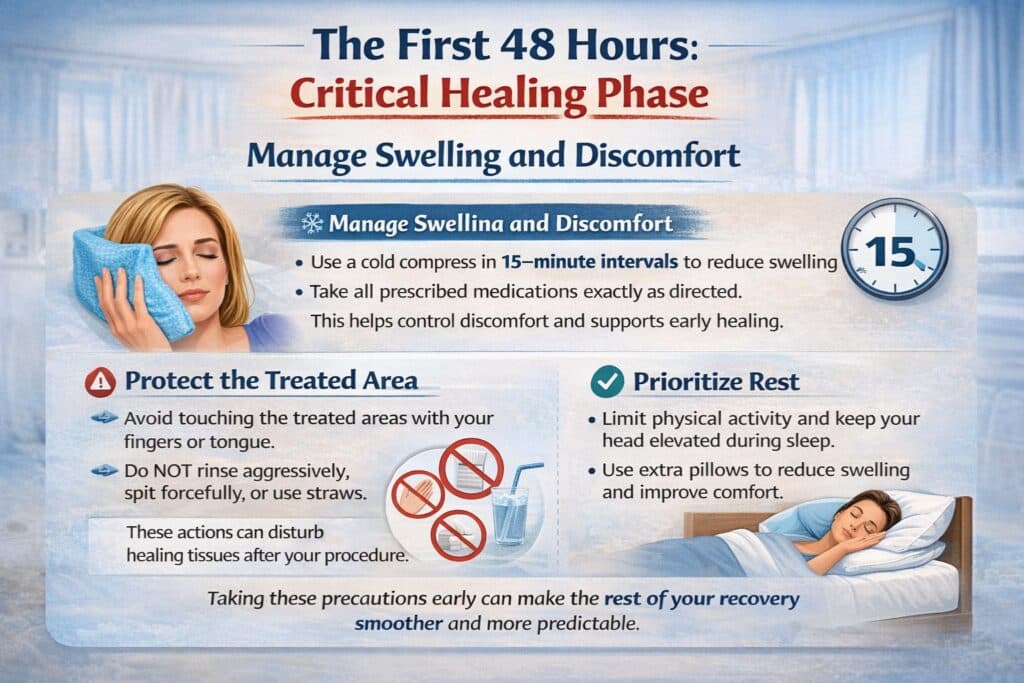
The first two days are crucial. Use a cold compress on your face in 15-minute intervals to reduce swelling. Take any prescribed medications exactly as directed. This helps control discomfort and supports early healing.
Protect the Treated Area
Avoid touching the surgical areas with your fingers or tongue. Do not rinse aggressively, spit forcefully, or use straws. These actions can disturb healing tissues and slow your progress after full mouth reconstruction.
Prioritize Rest
Give your body time to recover. Limit physical activity and avoid bending or lifting. When resting, keep your head elevated with extra pillows. This simple step can significantly reduce swelling and improve comfort.
Taking these precautions early can make the rest of your recovery smoother and more predictable.
Eating and Drinking After Reconstruction
Stick to Soft Foods
Your diet should be gentle on your mouth. Choose foods like yogurt, mashed potatoes, smoothies, scrambled eggs, and soups. These provide nutrition without putting pressure on healing areas.
Avoid These Foods
Stay away from hard, crunchy, sticky, or very hot foods. Items like chips, nuts, caramel, or hot beverages can irritate sensitive tissues or damage temporary restorations.
Stay Hydrated
Water supports healing and keeps your body functioning well. Sip regularly throughout the day. Avoid alcohol and sugary drinks during the early stages, as they can slow healing and increase irritation.
Many patients in the area find it helpful to plan meals, especially during busy weeks filled with work or family commitments, so they don’t accidentally choose foods that interfere with recovery.
Oral Hygiene During Recovery
Gentle Cleaning Routine
Keeping your mouth clean is essential, but it must be done carefully. Use a soft-bristle toothbrush and clean areas that are not sensitive. Avoid brushing directly over surgical sites until your provider gives clearance.
Rinsing Tips
After the first 24 hours, gentle saltwater rinses can help keep the area clean. Mix warm water with a small amount of salt and rinse lightly. Avoid strong mouthwashes unless recommended.
Why Hygiene Matters
Good hygiene prevents infection and supports faster healing. Even small lapses can lead to complications, so consistency is key. Patients who maintain a careful routine often notice quicker improvement and less discomfort overall.
Managing Pain, Swelling, and Side Effects
Some level of discomfort is expected after treatment, but it should gradually improve. Mild pain, swelling, and slight bruising are normal during the first few days. Using ice packs and following your medication schedule can make a noticeable difference.
Pay attention to how your body responds. If pain becomes intense or continues to worsen instead of improving, it may need professional attention. Similarly, prolonged bleeding or swelling that increases after a few days should not be ignored.
Staying ahead of discomfort is important. Take medications as directed rather than waiting for pain to build. Many patients at Sunrise Dental find that proactive care helps them stay comfortable and confident during recovery.
Activity and Lifestyle Adjustments
Avoid Strenuous Activities
Skip workouts, heavy lifting, and intense physical activity for a few days. Increased blood flow can worsen swelling and delay healing.
Sleep Position Matters
Sleeping with your head elevated reduces pressure and helps control swelling. This small adjustment can make your mornings feel much more comfortable.
Avoid Smoking and Alcohol
Smoking slows healing and increases the risk of complications. Alcohol can interfere with medications and irritate tissues. Avoid both until your provider confirms it’s safe.
In active communities where people enjoy outdoor walks or fitness routines, taking a short break can feel challenging, but it’s necessary for proper healing.
Follow-Up Care and Appointments
Regular follow-up visits are a critical part of recovery. These appointments allow your dental team to monitor healing, check restorations, and make any needed adjustments.
At Sunrise Dental, follow-ups are designed to ensure everything is progressing as expected. Small corrections made early can prevent larger issues later. Patients who stay consistent with these visits often experience smoother recoveries and better long-term outcomes.
Signs You Should Call Your Dentist Immediately
While most recoveries go smoothly, certain symptoms require prompt attention. Contact your dental office if you experience severe pain that does not improve, excessive or persistent bleeding, or swelling that worsens after two to three days.
Fever, unusual discharge, or a bad taste in your mouth may indicate infection. Acting quickly helps prevent complications and keeps your recovery on track. It’s always better to check than to wait and risk further issues.
Long-Term Care for Lasting Results
Once healing is complete, maintaining your results becomes the priority. Continue with a consistent oral hygiene routine and attend regular dental visits. If recommended, use a night guard to protect your restorations from grinding.
Think of your treatment as an investment in your health and confidence. With proper care, the results of your full mouth reconstruction in Huntington Beach can last for many years.
Emotional and Lifestyle Benefits After Recovery
As healing progresses, many patients notice meaningful improvements in their daily lives. Eating becomes easier, speech feels more natural, and confidence grows.
Whether you’re enjoying a meal with family or spending time at local events and gatherings, having a comfortable and functional smile makes a difference. The emotional benefits often match the physical ones, helping you feel more like yourself again.
Recovery may take time, but the results are designed to last. Each step you take, from managing swelling to attending follow-up visits, supports the long-term success of your treatment. Staying consistent with care instructions makes a noticeable difference in how quickly and comfortably you heal.
At Sunrise Dental, patients are supported throughout the entire process, from treatment to recovery. If you’ve recently undergone full mouth reconstruction or are planning one, staying informed makes all the difference. Taking the right steps today helps you enjoy a healthier, more confident smile for years to come.
What People Want to Know
How long does it take to recover after full mouth reconstruction?
Recovery time varies based on the procedures involved. Most patients feel better within one to two weeks, but complete healing can take several weeks to months, especially if implants or gum treatments are part of the plan.
What foods should I eat during recovery?
Soft foods like yogurt, soups, mashed vegetables, and smoothies are ideal. These options reduce pressure on healing areas and help you stay nourished without causing irritation or disrupting the recovery process.
When can I return to my normal diet?
You can slowly reintroduce regular foods as healing progresses and discomfort decreases. Your dental provider will guide you based on your treatment and how well your mouth is recovering over time.
How long will the results of the treatment last?
With proper care, results can last many years. Maintaining good oral hygiene, attending regular dental visits, and protecting your restorations from damage all contribute to long-term durability and function.
What signs indicate a problem during recovery?
Severe pain, excessive bleeding, increasing swelling after a few days, or fever may signal complications. Contact your dental office promptly if you notice anything unusual or symptoms that don’t improve.