

We all want a healthy, beautiful smile, but whether it be wear and tear, an injury, or hidden dental issues, sometimes our teeth need more than just a regular cleaning or filling. Full mouth reconstruction is recommended when a person’s oral health has been so severely compromised that multiple procedures are needed to restore function and aesthetics. A full mouth reconstruction is when multiple dental issues are addressed at once to restore your smile, teeth, gums, and jaw to optimal health.
If you have dealt with chronic dental issues, you need to know the signs that show you may be a candidate for this treatment. Whether it is due to aging, accidents, or untreated periodontal disease, recognizing these warning signs can motivate you to take action and restore a healthy, confident smile.
Key Signs You May Need Full Mouth Reconstruction
If you continue to have dental problems and are unable to maintain your teeth, it may be a sign that more advanced care is necessary. This section will take you through key signs that indicate whether full-mouth reconstruction is the solution for restoring your smile.
1. Severe Tooth Decay and Damage
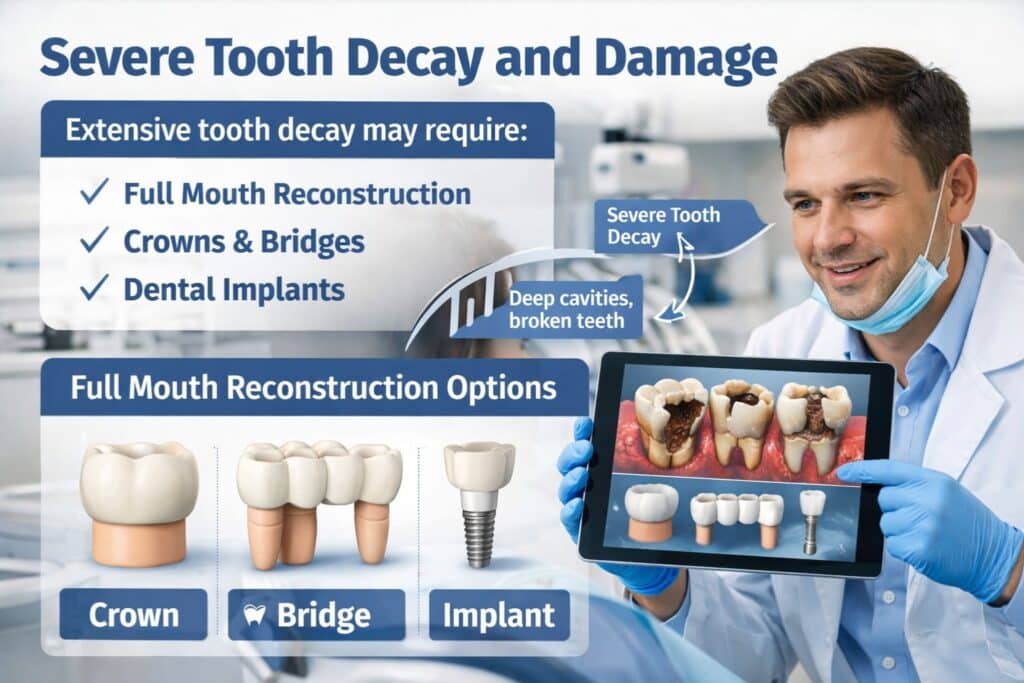
Widespread tooth decay is one of the most common signs that you may require full mouth reconstruction in Huntington Beach. For cases of severely decayed or damaged teeth with deep cavities or broken parts, fillings may not be enough. Untreated severe decay can result in tooth loss, which is where full mouth restoration comes into play. By doing so, it can replace decayed teeth with crowns, bridges, or even implants to help your smile look and function the way it should.
2. Missing Teeth
A gap due to one or more missing teeth can hinder your ability to eat, speak, and smile without reservation. Missing teeth can also lead to other dental issues, such as misalignment of the remaining teeth and the jaw when chewing. Full-mouth reconstruction, combined with advanced dental techniques, can replace missing teeth using dental implants, bridges, and/or dentures, providing stability while restoring both function and aesthetics.
3. Bite Misalignment (Malocclusion)
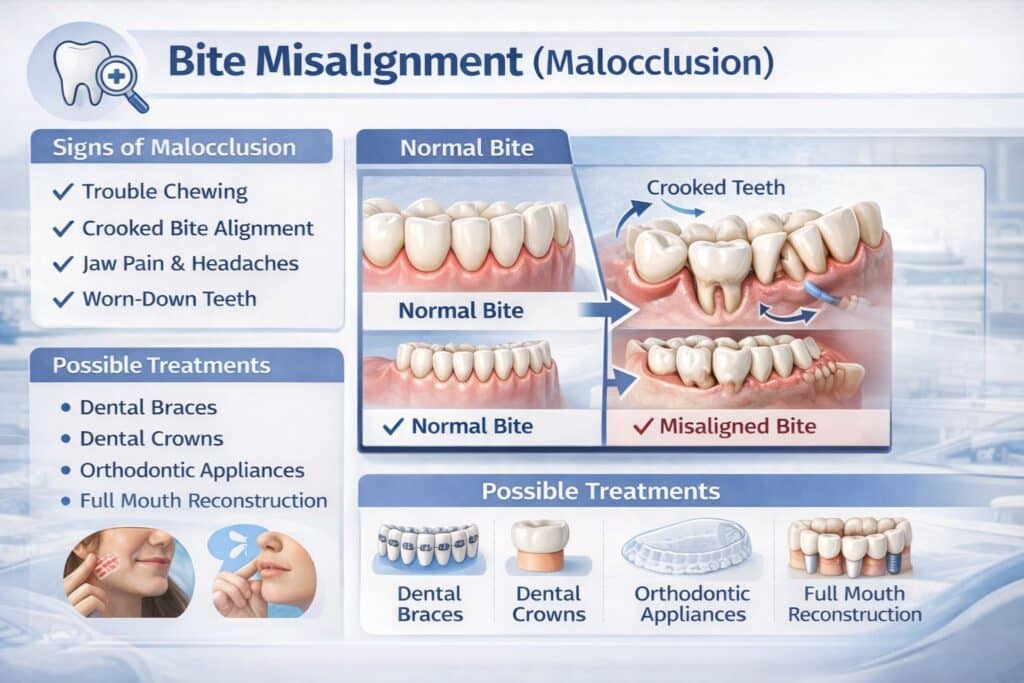
If you have trouble chewing or your teeth are misaligned when you bite, the culprit may be bite misalignment, also known as malocclusion. An improper bite can cause other problems over time, like worn-down teeth, headaches, and jaw pain. Sometimes malocclusion requires extensive treatment, which may involve dental crowns, braces, and/or other appliances as part of a full-mouth reconstruction.
4. Gum Disease
If left untreated, gum disease can lead to serious consequences, including tooth loss and bone deterioration. If your gums are swollen, bleed easily, or have withdrawn, it’s a sign that you might need more than just a routine cleaning. Gum disease can be effectively treated with full-mouth reconstruction, and through scaling and root planing, you are able to correct the underlying problem for gum disease, as well as other treatment options like bone grafting, so that your gums and teeth are restored to a healthier level.
5. Severe Tooth Wear
Teeth naturally wear away with use, but excessive grinding or clenching can speed up the process. Bruxism, or teeth grinding, can cause worn-down enamel, tooth fractures, or tooth loss. If this is an ongoing problem for you, full mouth restoration can restore those teeth to health and function using durable, natural-looking materials while preventing future damage.
6. Trauma or Injury
Your teeth can be severely damaged in accidents or trauma, which can temporarily or permanently affect how they look and function. Sports injuries, car accidents, and falls can all result in broken or missing teeth. Full-mouth reconstruction can restore damaged teeth with crowns, veneers, or implants, and treat any accompanying jaw or bite issues that caused the damage.
7. Aesthetic Concerns
If you are self-conscious about the appearance of your teeth due to discoloration, chips, or other cosmetic concerns, full mouth restoration may be what you need. This will require several cosmetic procedures, including porcelain veneers, whitening, and bonding, to revitalize your smile’s natural beauty and enhance its appearance and feel.
How Full Mouth Reconstruction Works
Full-mouth reconstruction is not a one-size-fits-all solution; the plan crafted for each patient will be unique to that patient. This treatment usually includes multiple dental procedures such as dental implants, bridges, crowns, dietary therapy, and Orthodontic Treatments. Having a thorough consultation with a dentist or specialist to assess your individual oral health and determine the best approach for your specific needs is essential.
The process starts with an extensive examination, potentially involving X-rays and a thorough review of your dental history. Then your dental team will design a customized plan, which may include several visits, to rehabilitate and restore your teeth and gums.
Regaining Your Smile with Full Mouth Reconstruction
Full-mouth reconstruction is a restorative treatment that can improve your smile both aesthetically and for your health. If you notice any of the above signs, it is time to visit a dentist to discuss dental filling options. Using state-of-the-art technology and individualized care, this all-inclusive treatment addresses several dental issues simultaneously to ensure a healthy, beautiful smile that increases your confidence and improves your quality of life.
At Sunrise Dental Center, we are here to do all we can to help you achieve the smile you have always dreamed of. Call us to make an appointment if you see any of the signs or for any other dental health issues. We will walk with you step by step so that you receive the highest quality of care.
Learn more about recovery tips after full mouth reconstruction.
Questions People Ask About Full Mouth Reconstruction
1. What is the main goal of full mouth reconstruction?
The goal of full mouth reconstruction is to restore both the function and aesthetics of your teeth, gums, and bite. This treatment is designed to address multiple dental issues at once, such as tooth loss, decay, and bite problems, providing a comprehensive solution.
2. How long does full mouth reconstruction take?
The duration of full mouth restoration depends on the complexity of the treatment plan. It can take several months, as it may involve multiple procedures such as implants, crowns, and braces. Your dentist will provide a timeline based on your specific needs.
3. Will I need to wear braces as part of full mouth reconstruction?
In some cases, orthodontic treatment may be required to align your teeth and bite correctly. This can be part of the overall treatment plan for full-mouth reconstruction, especially if malocclusion is among the issues being addressed.
4. Is full mouth reconstruction painful?
While some procedures in full-mouth reconstruction may cause temporary discomfort, modern dental techniques and anesthesia help ensure you remain as comfortable as possible. Pain management options will be discussed with you beforehand.
5. How long do the results of full mouth reconstruction last?
The results of full mouth reconstruction can last for many years, especially if you follow proper oral hygiene practices and attend regular dental check-ups. The longevity of your results will also depend on the materials used in your reconstruction.
6. Is full mouth reconstruction covered by insurance?
Insurance coverage for full mouth reconstruction varies depending on the procedures involved and your specific insurance plan. It’s important to check with your insurance provider and discuss payment options with your dental office.